Reaching 50k premium subscribers
applying a continuous research process
The challenge
Reach's revenue model was built on advertising and page views. As both came under increasing pressure, the business made a strategic decision to build a subscription based product. Although the decision to build the product had been made, research had the opportunity to steer this product into something of value for users.
What I did
Previous generative studies had established what users would pay for. That became my starting point.
Mapped competitor subscription products and ran a Kano model study to identify which features were genuinely valued and which users were indifferent to
Facilitated a stakeholder ideation workshop to translate research findings into a product roadmap
Embedded across the product build and launch over three years, running six studies across web and app including workshops, moderated and unmoderated testing
Outcome
50k
subscribers in 9 months
post launch
brands across the rollout
studies across 3 years of continuous embedded research
Full case study below
⬇
19
6
In a world where news is seen as a commodity,
what would users pay for?
1. Introduction
Reach's first attempt at a subscription product was built around restricting access to content. A metered paywall limited how many articles readers could access for free, while a premium tier offered ad-free reading and exclusive content. The proposition underperformed significantly.
Generative research run by the team identified why. Readers do not pay for content they can find elsewhere for free. What they will pay for falls into three categories:
Exclusive content they cannot get anywhere else.
Individual creators they want to support directly.
Services that deliver a tangible social good.
That research became my starting point. My job was to take those three principles and help build a subscription product that actually reflected them. Over three years I embedded myself across the product build and launch, running studies at different stages of the journey, from shaping the initial proposition to evaluating the experience of real subscribers.
Details of the continuous process are given in the following two studies.
Exclusive content

"I can't get it anywhere else"
Individual creators
"I will pay the person not the organisation"

Social good

"I'm aligned with their values"
2. Study 1: Understanding the competition
Competitors analysis
One of the first steps we took once the decision to build the subscription product was to understand what the competition was doing. In order to do so, I created an analysis of what Reach’s main competitors are delivering in the following areas:
Advertising their subscription packages.
Main subscription workflows
Free vs. premium content strategy
Premium content formats
Homepage structure
Non content extras
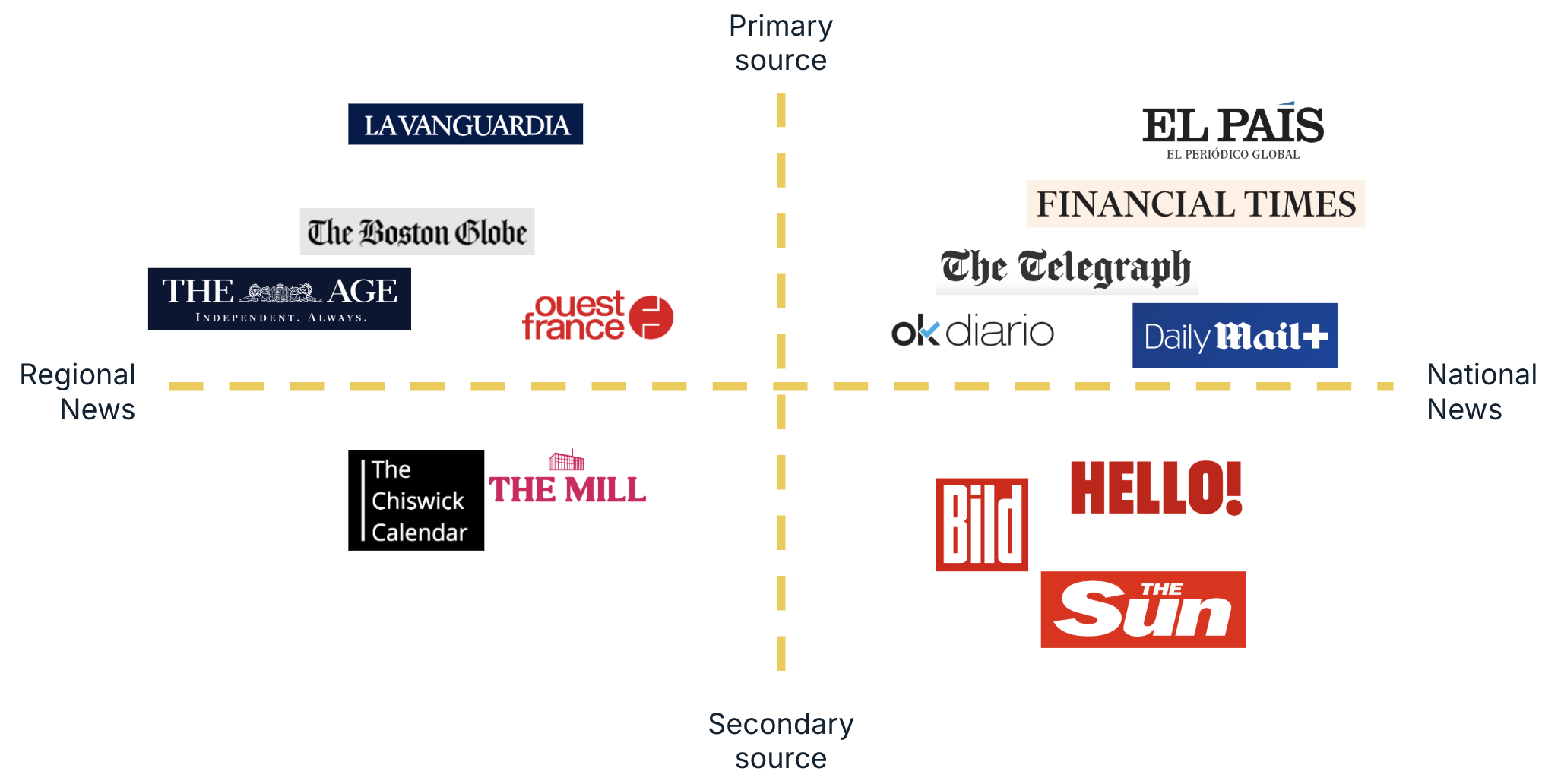
Competitor analysis. Brands studied.
Kano model
I conducted a Kano model to understand which parts of our competitors subscription packages were most appealing to our users. The Kano model is a framework for understanding which product features genuinely delight users, which are simply expected, and which users are indifferent to.
Rather than asking "do you want this feature?" which almost always gets a yes, it asks paired questions about how users would feel if a feature was present and how they would feel if it was absent. The gap between those two answers reveals the true value of a feature and helps product teams prioritise development.
The model was run with 25 Express readers through a survey, testing the presence or absence of 21 possible new features, ranging from Live Events to meet the journalists to games, discount codes, etc.
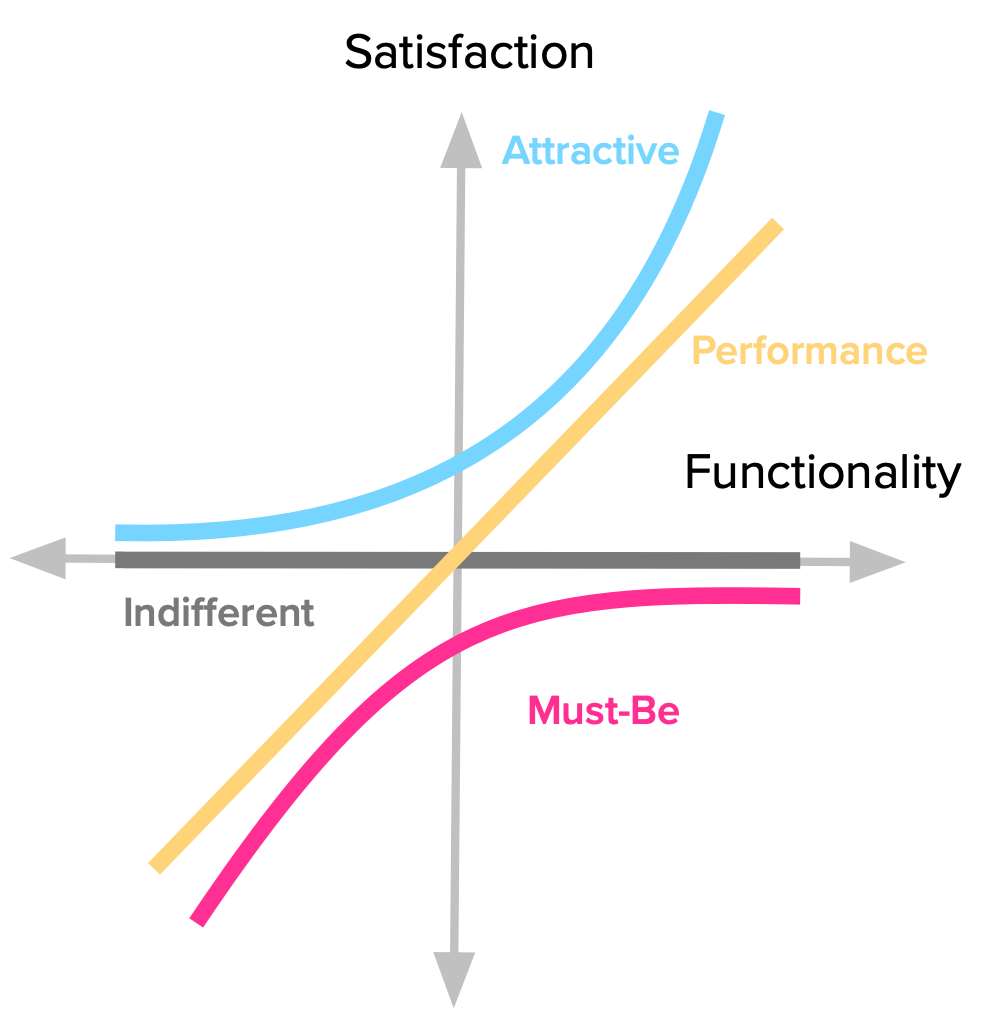
Kano model overview
Recommendations
Testing features from across the competitive landscape against our three principles revealed clear delighters in each category:
Exclusive content
Domain-specific deep dives in finance, health and investigations
Long reads and expert analysis that cannot be found elsewhere for free
Individual creators
Columnist led content with visible bylines and dedicated author pages
Writer led newsletters delivered directly to subscribers
Social good
Transparent messaging around supporting local journalism
Values-aligned positioning: independent, community-funded, ad-free
The Kano model also opened up a fourth avenue that the generative research hadn't surfaced. Readers didn't just care about content, they feel good when the subscription to pay for itself.
Return on investment:
Guaranteed partner discounts
Tangible retail rewards
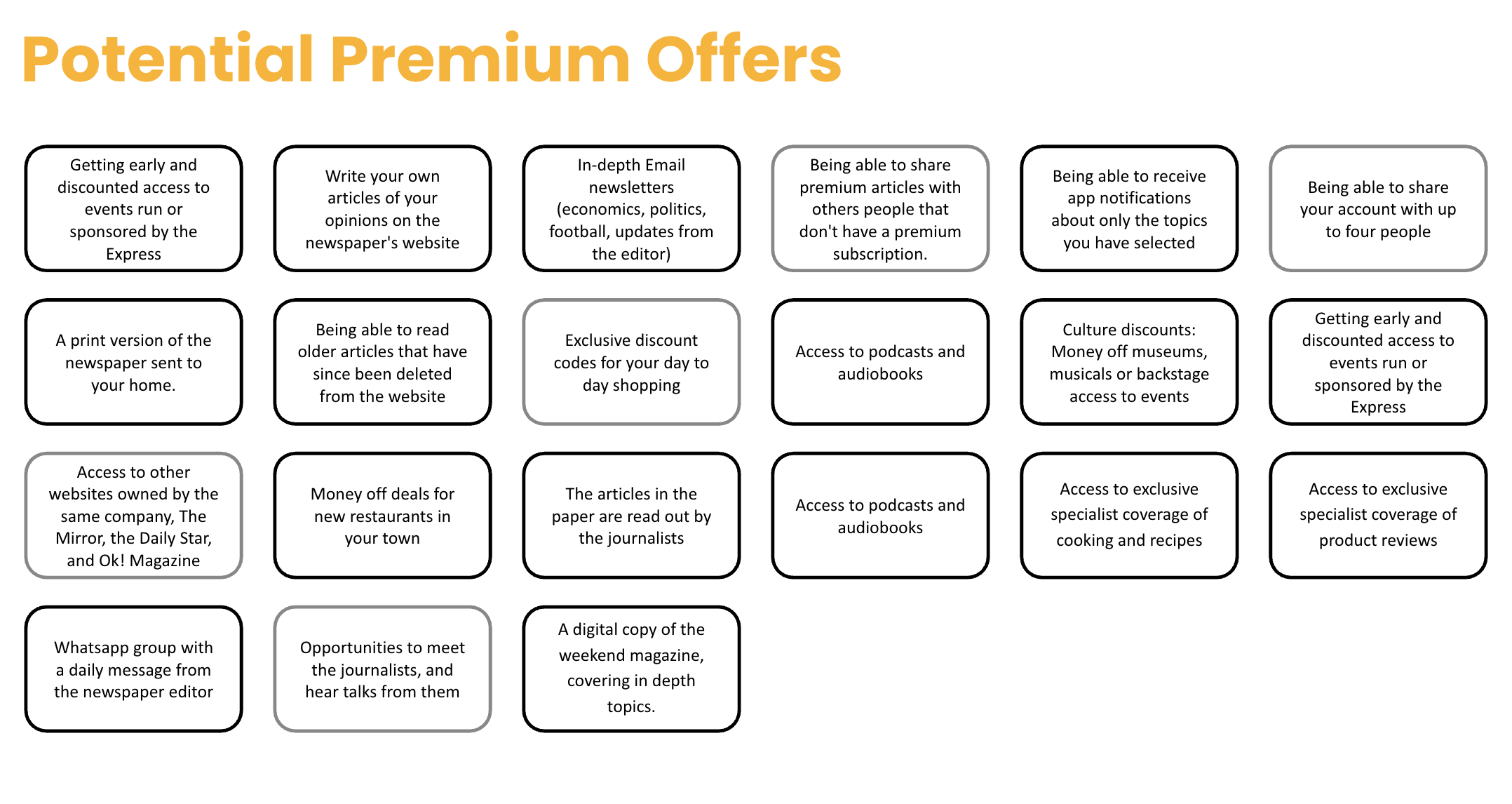
List of different propositions tested

Return on investment
“The subscription pays for itself”
Our new avenue to explore
Stakeholder ideation workshop
To translate the research findings into a product roadmap, I facilitated an ideation workshop with stakeholders across product, editorial, data and design. The session generated 28 hypotheses across four areas: internal strategy, partnership solutions, improving current features and new product concepts.
From there we ran a culling exercise, grouping similar ideas and removing duplicates. Each surviving hypothesis was then evaluated against impact, effort, risks and competitor landscape before being prioritised into three tiers:
Enablers: foundational changes that unlock everything else, including better user data, clearer editorial strategy and improved communication channels
Mid-term opportunities: relationship-based features, premium content formats and journalist communities
Longer-term opportunities: brand partnerships, bundling strategies and cross-portfolio access
The workshop gave stakeholders shared ownership of the direction rather than just handing them a research report.
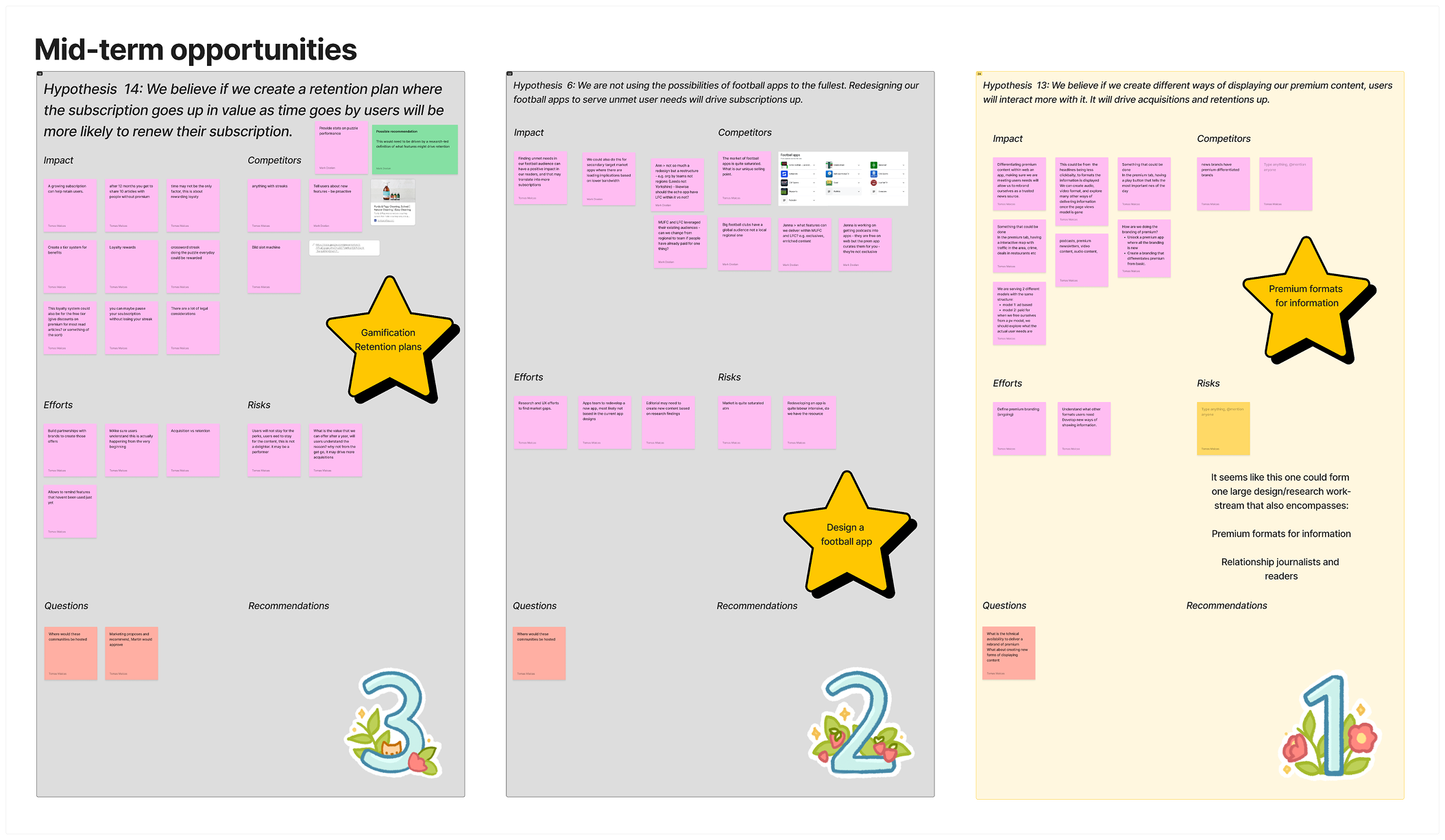
Sample of different propositions tested
3. Study 2: Testing the proposition post launch
Setting up the study
As the product launched and rolled out across brands, we ran two parallel studies. One with existing subscribers to understand their experience and one with ten loyal Express app readers who had not subscribed, to understand why not and whether the current proposition could convert them.
For the study with unsubscribed users, I structured in four parts, each going deeper into the subscription journey.:
Exploring their relationship with premium news in general
Their expectations of the Express specifically
Understanding the subscription page.
Giving each participant free premium access and exploring their first steps as a new subscriber in real time.

20 participants
Recruited via UserTesting.com

2 cohorts
Premium Users
Loyal free Users

Semi structured
interviews
30 min
Findings and recommendations.
The findings from this study mapped directly onto the four principles established through the Kano model and the ideation workshop. Rather than surfacing new problems, they confirmed and sharpened what we already knew, showing exactly where the gap between what users would pay for and what the product was delivering was widest.
Exclusive content: The product wasn't delivering it. Premium articles felt like slightly longer versions of free content. Users could find most of it on Google. The locked content strategy felt arbitrary rather than curated.
Individual creators: The one thing that worked. Journalist faces and bylines on the subscription page were consistently praised. Users wanted to follow specific writers. This was the clearest signal of what a differentiated proposition could look like.
Social good: Almost entirely absent from the product. Users mentioned health and wealth content as things they would pay for, but the editorial focus on celebrity and royal gossip buried any sense of purpose or community value.
ROI: Rewards generated genuine excitement as a concept, but the execution destroyed it immediately. Expired competitions and dead links on day one of being a subscriber turned the strongest conversion driver into a churn risk.
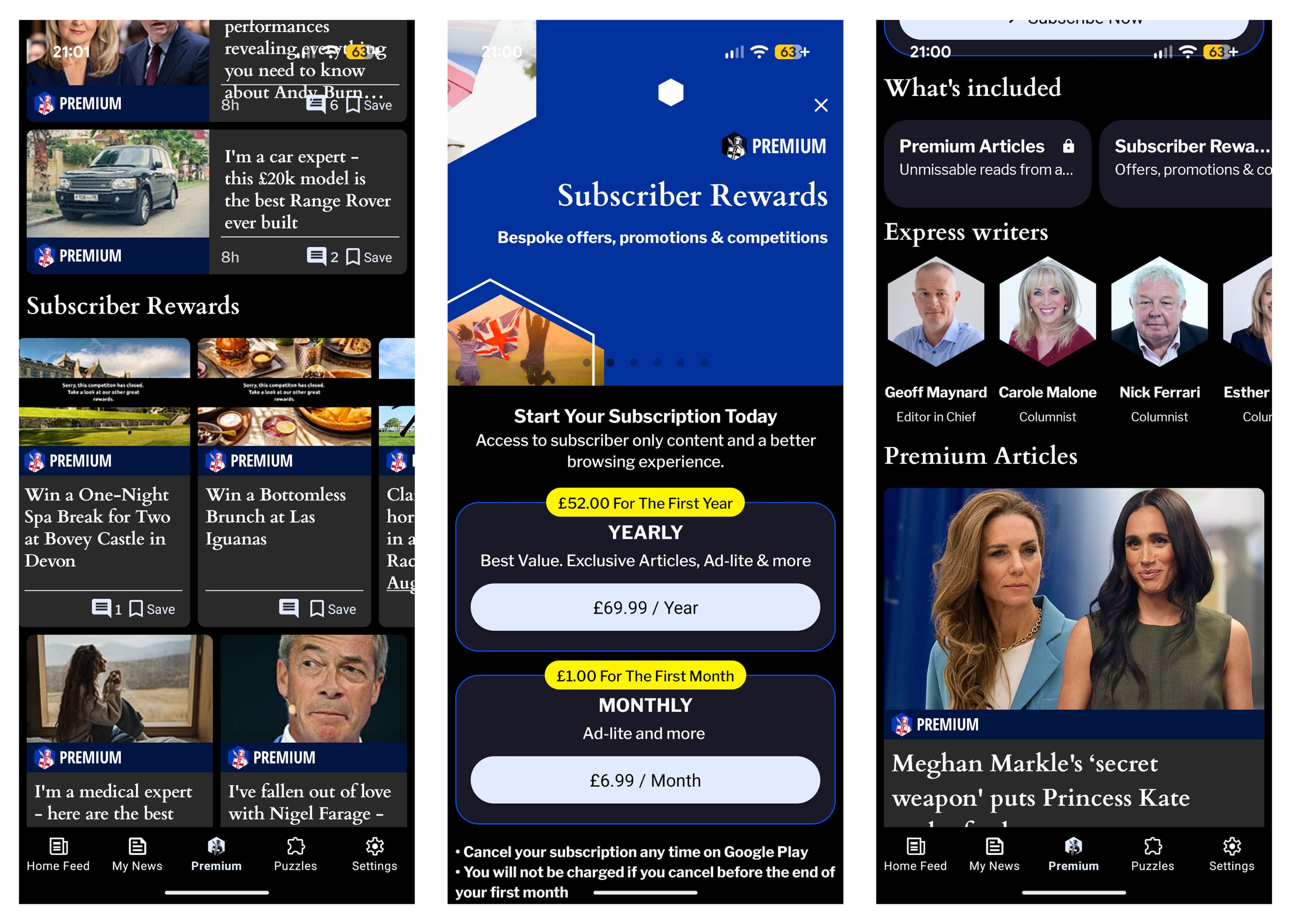
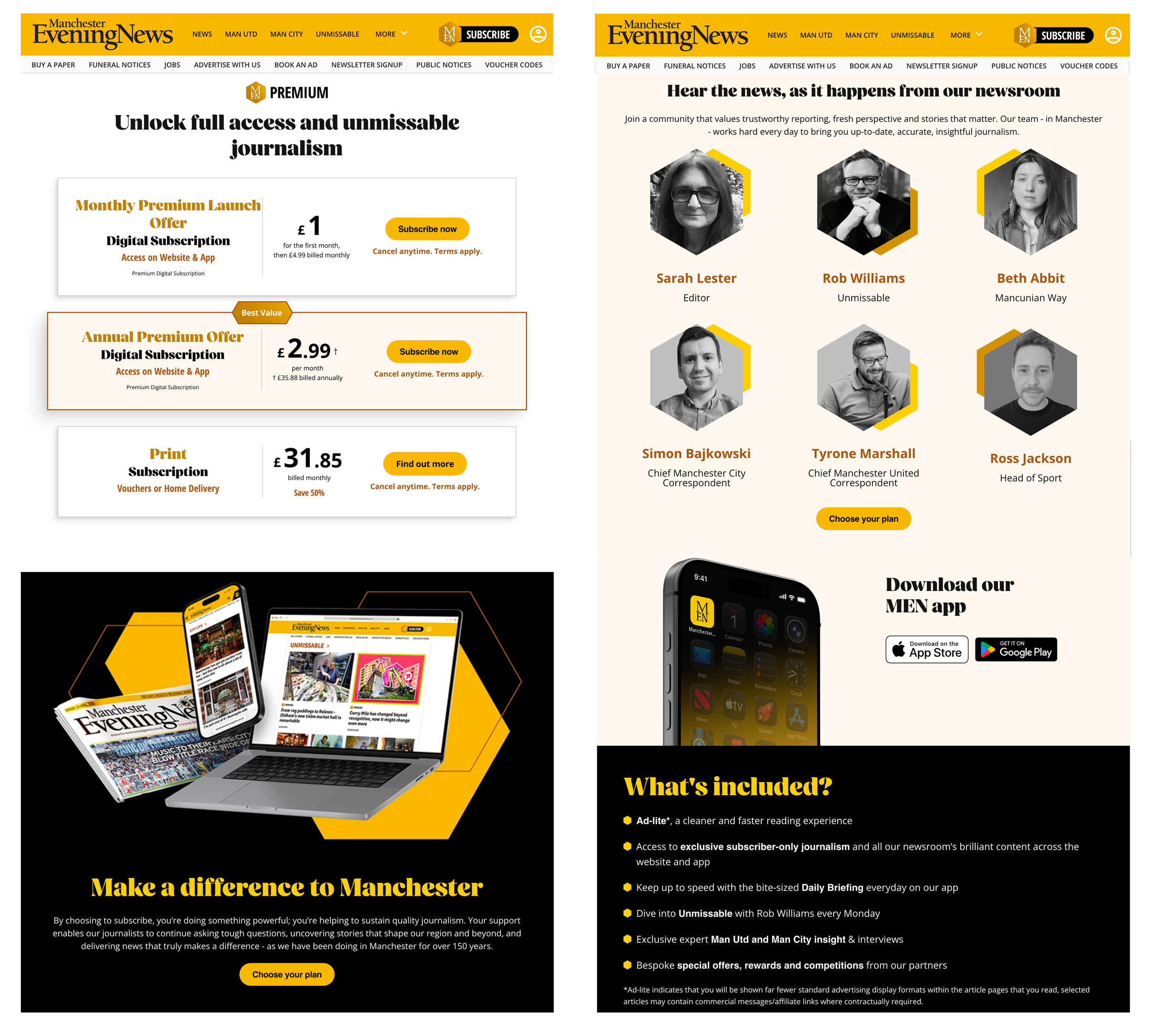
Daily express premium proposition
4. Conclusions
Three years of embedded research across six studies told a consistent story. Users knew what they wanted from a premium news product: exclusive content, journalists they could trust and follow, a clear return on their investment, and a sense that their subscription meant something.
I embedded myself across the full product lifecycle, from shaping the initial proposition to evaluating the experience of real subscribers
Six studies across web and app kept decisions grounded in evidence as the business pressure to move fast pulled in other directions
This is what continuous embedded research looks like: not a one-off study, but a sustained presence across three years of a product being built, launched and iterated
Keeping the evidence at the centre of the conversation led to 50,000 subscribers in 9 months across 19 brands
What I learned
Embedded research only works if you stay embedded. The moments where evidence mattered most were rarely right after a study landed.
The right method at the right moment matters more than consistency. A Kano model, a usability test and a depth interview answer completely different questions.
One subscription product across 19 brands is not one problem. Readers from different publications value vastly different things and the proposals should reflect that.